How to Keep Your Polyester Fiber Filling Quilt from Slipping:Tips and Solutions
Polyester fiber filling quilts often slip or shift within their encasing fabric, leading to uneven warmth and a less comfortable sleep surface. This occurs because the lightweight synthetic filling can easily move. To prevent slipping, one effective solution is using elastic corner binding on the quilt cover, which holds the filling in place. Another method is "basting," where elastic or twill tape is sewn along the quilt's edges to contain the filling. Investing in a "baffle box" or "box quilt" construction provides a more permanent solution by creating compartments that keep the polyester fibers from shifting. Proper washing and drying according to the manufacturer's instructions also helps maintain the quilt's loft and performance.
Hey everyone! Today, we're diving into a common issue that many of us face with our quilts and comforters: polyester fiber filling tends to slide or shift within the casing. If you've ever woken up feeling like your quilt has moved halfway across the bed, or if you notice a distinct lumpiness after a good night's sleep, you've likely experienced this. It's frustrating, right? But don't worry, we're here to break down why this happens and, most importantly, how to prevent it. We'll also touch on some innovative solutions, like those offered by manufacturers such as Jia Yu Textile Factory.
Let's start by understanding the basics. Polyester fiber filling is incredibly popular for quilts and pillows because it's durable, hypoallergenic, and generally quite affordable. It provides good warmth and retains its shape well over time. However, one of its drawbacks is its tendency to "slip" or "lump" within the quilt cover or comforter case.
Why Does Polyester Fiber Filling Slip?
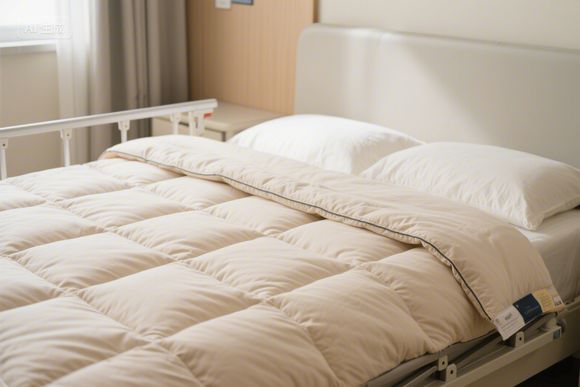
Think of polyester fibers like tiny, individual plastic threads. They are smooth and round. When you compress these fibers together to fill a quilt or comforter, they naturally want to find the path of least resistance. This often means they will slide towards the areas of the casing that are least restrictive or have fewer reinforcing elements, like the corners or seams where the fabric might be slightly looser. This shifting creates the uncomfortable lumps you might feel and explains why the filling seems to move around so much.
Here's a quick comparison of factors contributing to slipping:
| Factor | Description | Impact on Slipping |
|---|---|---|
| Fiber Type | Standard polyester fibers are smooth and round | High tendency to slide past each other |
| Filling Density | Lower density means more empty space | Allows fibers to shift more easily |
| Casing Construction | Single layers of fabric, seams can be weak points | Creates areas where fibers can escape |
| Weave Structure | Loose weave allows fibers to protrude | Reduces containment of filling |
| Surface Treatment | Untreated fibers offer minimal grip | Increases sliding movement |
Common Culprits and Contributing Factors:
- Fiber Design: As mentioned, standard crimped polyester fibers are designed for loft and warmth, not necessarily for staying power within a tight weave. Their smooth surface lacks inherent friction.
- Filling Power/Density: Lower-fill-density quilts use more air space relative to the amount of fiber. This gives the fibers more room to move. Higher-density fills are generally less prone to shifting because there's less empty space for the fibers to escape.
- Casing/Cover Construction: The fabric used for the quilt cover or comforter case plays a huge role. Fabrics with a loose weave or many small holes (like percale) are worse culprits for allowing filling to escape. Even tightly woven fabrics can have weak points at seams or hems.
- Weave Structure: The way the fabric is woven can influence how well it contains the filling. A tightly woven, dense fabric will do a better job of holding the polyester fibers in place than a looser weave.
Solutions to Combat Slipping:
Okay, so we know the problem, but what can we do about it? Here are some effective strategies:

- Choose Higher-Density Fills: Look for quilts and comforters specifically advertised as "high-density" or "premium density." The extra weight means the fibers are packed tighter, leaving less room for movement.
- Opt for Tightly Woven Casing Fabrics: The outer cover matters just as much as the filling. Choose quilt covers or comforter cases made from tightly woven fabrics like sateen (which has a tighter weave than percale) or even a good quality cotton sateen or linen. Avoid loose weaves like standard percale if slipping is a major concern.
- Look for Anti-Shift Technologies: Some manufacturers incorporate specific technologies or surface treatments designed to reduce shifting. This could involve:
- Textured Fibers: Using fibers that aren't perfectly smooth, perhaps with a slight napped surface or crimp, which creates more friction between fibers.
- Surface Coatings/Treatments: Applying a very fine, non-stick coating to the fibers themselves (though this is less common for filling fibers and more for shell fabrics) or using fibers with inherent properties that increase friction.
- Special Weave Patterns: Using weave patterns that create a more 'locking' effect for the filling.
- Consider Baffle Box or Euro Shams Construction: Instead of a traditional quilting pattern or a simple envelope-style cover, some quilts use a baffle box construction. This involves vertical baffles (usually made of fabric strips sewn together) that create compartments within the quilt, preventing the filling from shifting between them. Euro shams also use a similar box pleat construction, which helps contain the filling.
- Use Quality Quilt Ties or Darts: Traditional quilting involves tying or darting the layers together. While purely decorative in many modern quilts, these structural elements can also serve a functional purpose by reinforcing the casing and preventing the filling from migrating to one side.
The Advantage: Jia Yu Textile's Approach to Polyester Fiber Filling
Now, let's talk about a specific player in the textile industry: Jia Yu Textile Factory. They specialize in producing high-quality polyester fiber filling. While they utilize standard polyester technology, their focus is often on consistency, performance, and meeting specific client requirements. When discussing their products, you might find information highlighting:
- Durability and Consistency: Emphasizing that their polyester fibers maintain their shape and performance wash after wash.
- High Loft and Warmth: Stating that their fibers provide excellent insulation properties.
- Hypoallergenic Properties: Reassuring customers about the suitability for sensitive individuals.
- Potential for Customization: Mentioning the ability to produce fibers with specific crimp levels or blends for different applications.
While Jia Yu might not explicitly market their standard polyester as a "non-slipping" product, their commitment to quality manufacturing means the fibers are produced consistently, and the density can be controlled. Furthermore, the quality of the final quilt product (the stitching, the casing fabric used by the manufacturer) is crucial. If Jia Yu supplies high-density polyester fiber to a quilt maker who uses a tight weave casing, the resulting product will be much less likely to slip than one using low-density fiber and a loose weave cover.
Real-World Example:
Imagine two people buying down comforters this season. Person A buys an inexpensive comforter with a very low fill count and a percale cotton cover. Person B buys a higher-priced option advertised as "high-density" polyester fill, paired with a sateen cotton comforter case known for its tight weave. Over the next few months, Person A likely experiences significant shifting and lumpiness, leading to frustration. Person B, while paying more upfront, enjoys a flatter, more consistent feel to their comforter because the filling is better contained by the higher density and the tighter weave of the casing.
Frequently Asked Questions (FAQ):
Q1: Is slipping only a problem with polyester fiber filling, or does it happen with other fills too? A: While polyester is particularly notorious for this due to its smooth fibers, other synthetic fills like rayon or bamboo viscose can also slip significantly because they are often made from regenerated cellulose and have a similar smooth texture. Down and feather are less likely to shift in volume but can clump unevenly. Blended fills can vary.
Q2: Can I fix a slipping comforter myself? A: You can try shaking out the comforter vigorously, using an upholstery brush to gently lift and redistribute the filling, or even placing it in the dryer on a low tumble setting for a short time (following care instructions!) to help fluff and settle the fibers. However, these are temporary fixes. The best solution is prevention through choosing the right product initially.
Q3: What's the difference between "fill power" and "density"? A: Fill power measures the loft or fluffiness of down feathers (higher is better) but is sometimes used loosely for synthetic fills to indicate bulk. Density, measured in ounces per cubic yard (oz/yd³), is a more accurate measure for synthetics. It tells you how much weight is packed into a given volume, directly correlating with warmth and, generally, reduced shifting potential.
Conclusion:

Dealing with a polyester fiber filling that keeps slipping can be a real downer. The key takeaway is understanding that it's a property of the fiber itself and how it interacts with the casing. By choosing higher-density fills, paying attention to the quality and weave of the outer cover, and potentially looking for products with anti-shift features or baffle box construction, you can significantly reduce or even eliminate this frustrating issue. Remember to consider the entire product – the filling from a reliable source like Jia Yu Textile Factory combined with a well-constructed casing is the best way to ensure a consistently comfortable sleep experience. Happy sleeping!
Expanded Knowledge:
In this discussion, let's explore the topic of polyester fiber's tendency to slide when used as a bedding material. Here's an English-speaking conversation example:
A: 你好,关于聚酯纤维被芯的问题,我们需要注意哪些方面?
B: 聚酯纤维的被芯确实存在一些问题,比如容易滑落,你知道为什么会出现这种情况吗?

A: 聚酯纤维被芯容易滑的原因可能有几个方面,其材质特性可能导致纤维之间的摩擦力不足,可能由于生产工艺或材料质量的问题,导致被芯在处理和使用过程中容易出现变形或滑动,如果被芯设计不合理或者使用环境潮湿,也可能加剧其滑动的现象。
为了进一步说明,我们可以使用表格来详细解释:
| 因素 | 聚酯纤维被芯滑动的可能原因 |
|---|---|
| 材质特性 | 纤维之间的摩擦力不足 |
| 生产工艺 | 工艺不当或材料质量不稳定 |
| 使用环境 | 使用环境潮湿或设计不合理 |
为了更好地理解这个问题,我们可以看看佳羽纺织厂的产品优势介绍:
产品优势介绍:佳羽纺织厂聚酯纤维被芯的优势在于其出色的抗滑性能和耐用性,该厂采用先进的生产工艺和严格的质量控制标准,确保每一款聚酯纤维被芯都具备良好的抗滑性能,佳羽纺织厂还注重产品的设计合理性,确保被芯在使用过程中能够保持良好的形状和稳定性,这些因素共同作用,使得佳羽纺织厂的聚酯纤维被芯在市场上具有很高的竞争力。
案例说明:以一个具体的例子来说明聚酯纤维被芯容易滑的问题:某客户在使用了佳羽纺织厂的聚酯纤维被芯后,反馈其在使用过程中经常出现滑落现象,经过调查,发现是因为该被芯在生产过程中存在工艺问题,导致其纤维之间的摩擦力不足,针对这一问题,佳羽纺织厂提供了相应的解决方案,并重新生产了一批符合要求的被芯,经过一段时间的使用,客户反馈该被芯的使用体验有了明显的改善。

聚酯纤维的被芯确实存在容易滑的问题,但通过佳羽纺织厂的产品优势和针对性的解决方案,可以有效地解决这一问题,在选择聚酯纤维被芯时,消费者应该注意产品的质量、生产工艺以及使用环境等因素。



